

Excavations


One of the most exciting things about archaeology is the finds. Holding an artefact that has been buried for 5000 years is a unique experience. A range of finds with a wide date range were recovered from topsoil and underlying layers representing the very mixed and disturbed nature of these deposits. These included early and late Neolithic flint, much of which comprised burnt, retouched tools and pottery ranging in date from early Neolithic (20 sherds) through to the Late Neolithic, Early/Middle Bronze Age and Late Bronze Age/Early Iron Age. This extensive date range illustrates interest in the site throughout the prehistoric period and into more modern times.
Geology

One of Cornwall’s best-known geologists visited the excavation and gave his expert comment on the stones. Colin Bristow told us that the monument lay right on the contact zone of the Carmenellis granite and the lower-lying killas.
He suggested that the stones were probably sourced from the area and that they had not been moved at any great distance by the Neolithic community who erected this impressive portal dolmen.
One distinctive feature of the capstone is the presence of xenoliths, small spotted blotches (no more than 10cm in diameter), which pepper the surface of the granite capstone. These xenoliths are fragments of killas and their presence indicates that the capstone was originally not far from the granite edge.
Moving The Stones

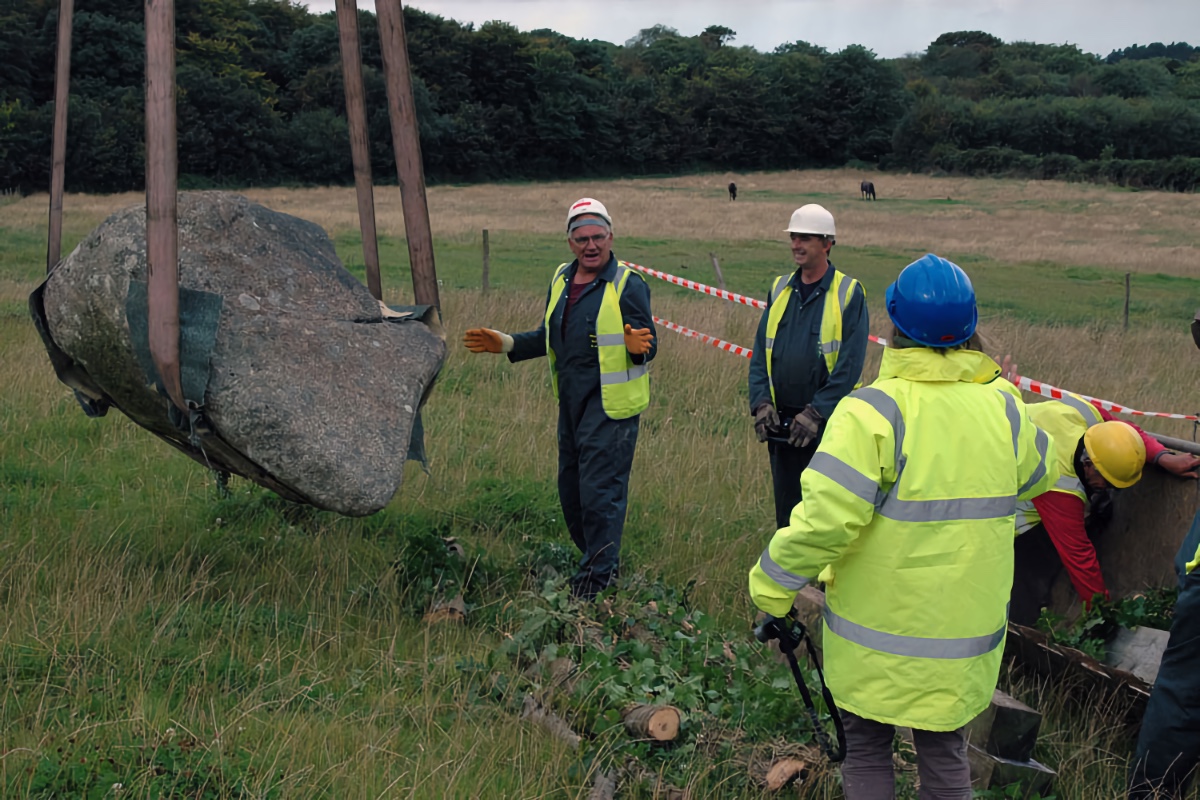
In 2012 two excavations were held. The first was to make a preliminary investigation through test pits. The stones were then removed from the place where they had collapsed and the ‘Big Dig’ was undertaken.